Mission-Erde-Entdecken

Tour Tagebuch

Back to overview
Thailand (2 February – 27 March 2026)

We will be adding to this section as our journey progresses – so it’s worth checking back every week.
Clicking on the date opens the relevant entry – the most recent entry is open by default.

13 March 2026

2026-03-13_Thailand_378.jpg
2026-03-13_Thailand_379.jpg
2026-03-13_Thailand_380.jpg
2026-03-13_Thailand_381.jpg
2026-03-13_Thailand_382.jpg
2026-03-13_Thailand_383.jpg
2026-03-13_Thailand_385.jpg
2026-03-13_Thailand_411.jpg
2026-03-13_Thailand_412.jpg

Street life on Koh Samui


If you venture a little way from the beaches and simply stroll through the streets, Koh Samui reveals a completely different side to itself. It is not a place of grand boulevards or spectacular architecture. Instead, life here consists of many small scenes unfolding along the streets.

Simple roadside kitchens spring up beneath colourful parasols. A woman concentrates on preparing food, surrounded by plastic crates, cool boxes and makeshift work surfaces. Everything looks makeshift – yet perfectly organised at the same time. Here, people cook, sell, eat and chat.

A few streets further on, a gate suddenly appears, richly decorated with dragons and bright colours. Behind it lies a small Chinese temple. Such places feel almost like hidden islands within the city – calm, quiet and full of detail, whilst outside mopeds whizz past and everyday life goes on.

The streets themselves are narrow and functional. Scooters are parked in front of the houses, small restaurants open directly onto the street, and power cables run in dense bundles across the rooftops. Much of it seems improvised, but that is precisely what gives these places their character.

The traffic consists mainly of mopeds. Some carry only their rider, others astonishing quantities of goods. Packages, crates, baskets and boxes are stacked on top of one another and lashed down with ropes. What would probably be considered impossible in Europe works surprisingly reliably here.

Finally, the markets reveal the island’s full colourfulness. Bananas hang in large bunches from the ceiling, while mangoes, dragon fruit and oranges lie in high piles on the tables. Between the stalls, traders sit, chatting or waiting patiently for the next customers.

These are not spectacular scenes – and perhaps that is precisely why they reveal so much about everyday life on the island. Life here seems less planned and less structured than back home. At the same time, everything seems to have found its own rhythm.

10 March 2026

Everyday life, beaches, relaxation

And they do exist after all…


…the places that are worth travelling here for.

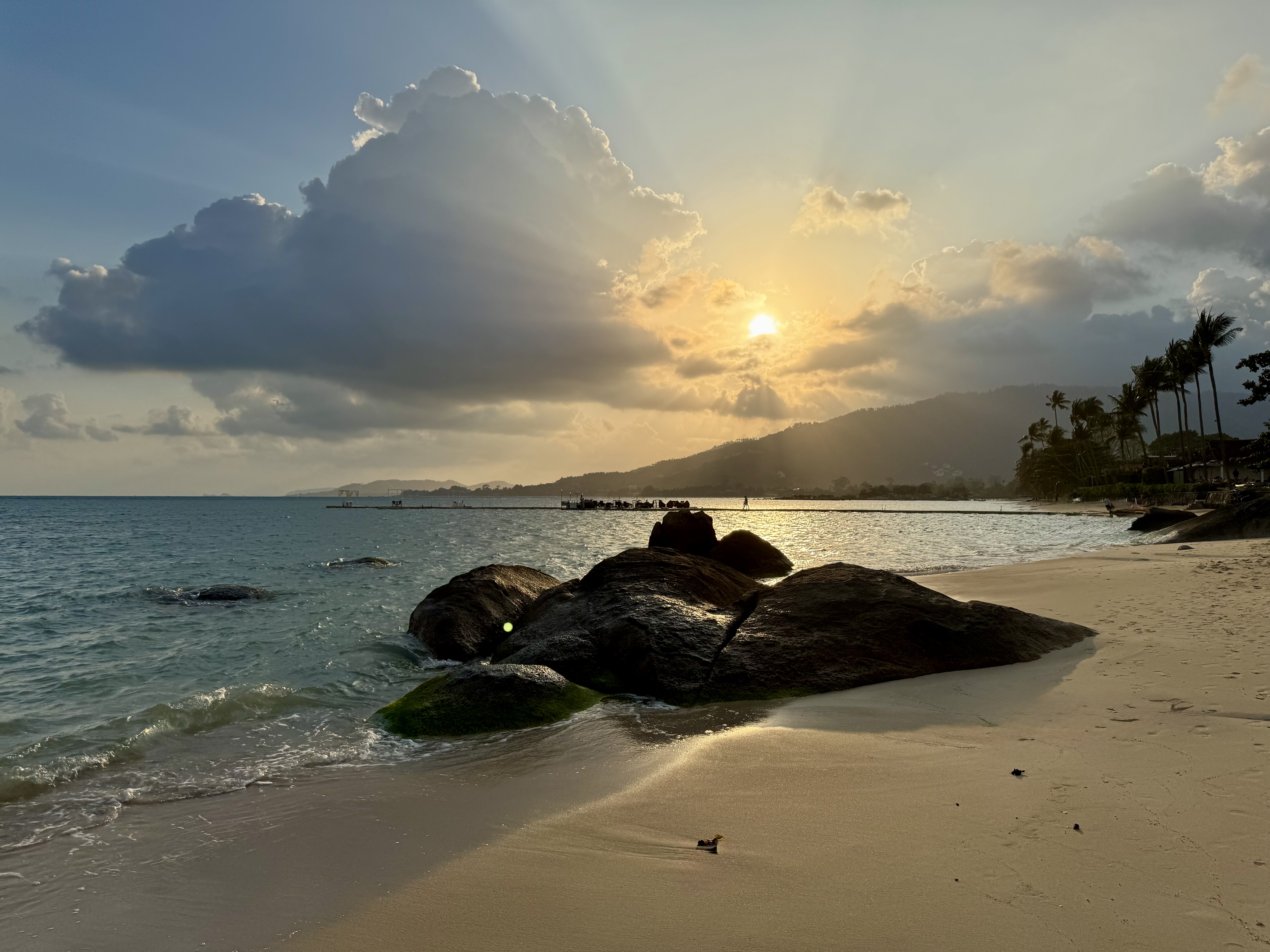
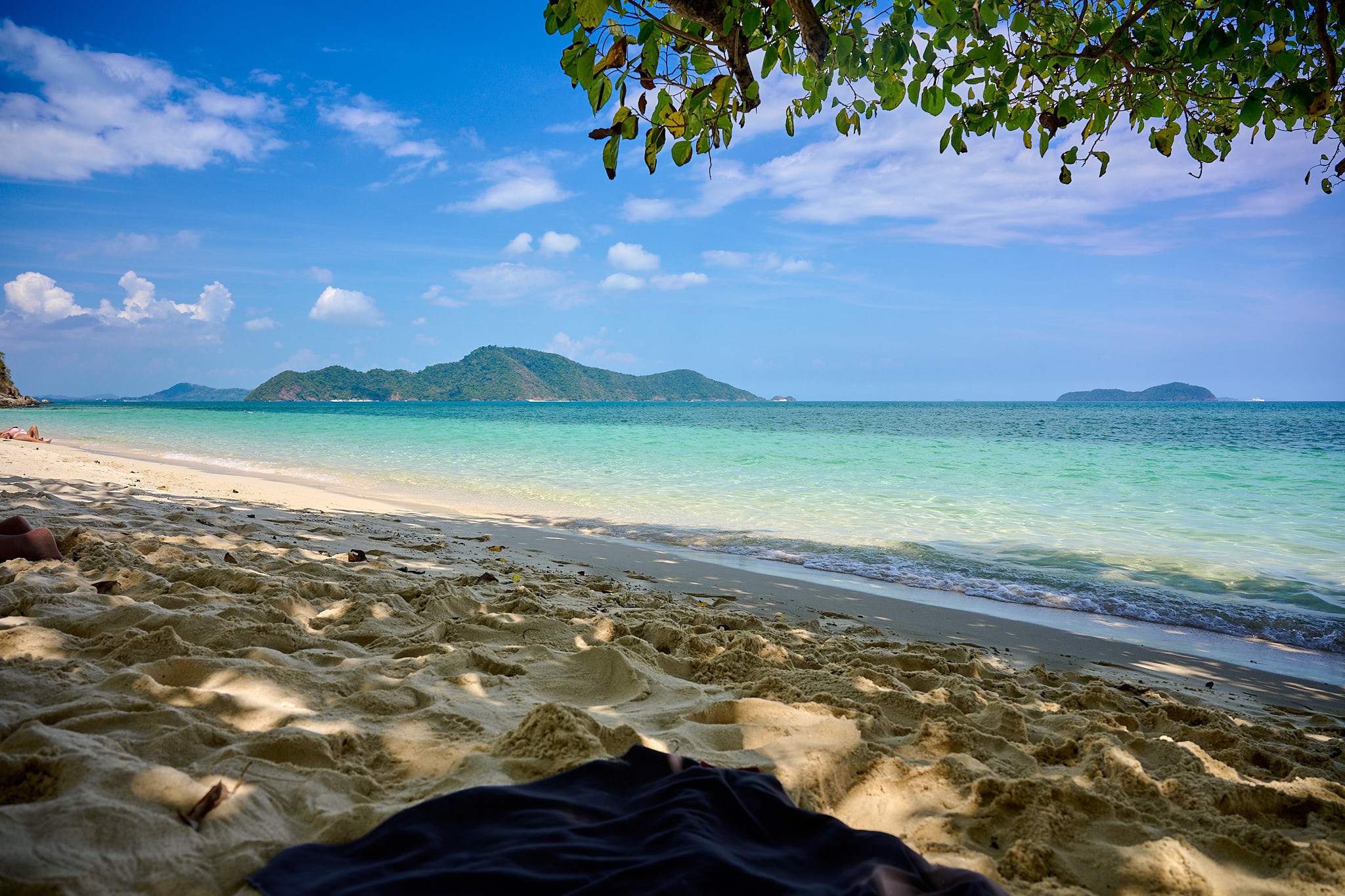
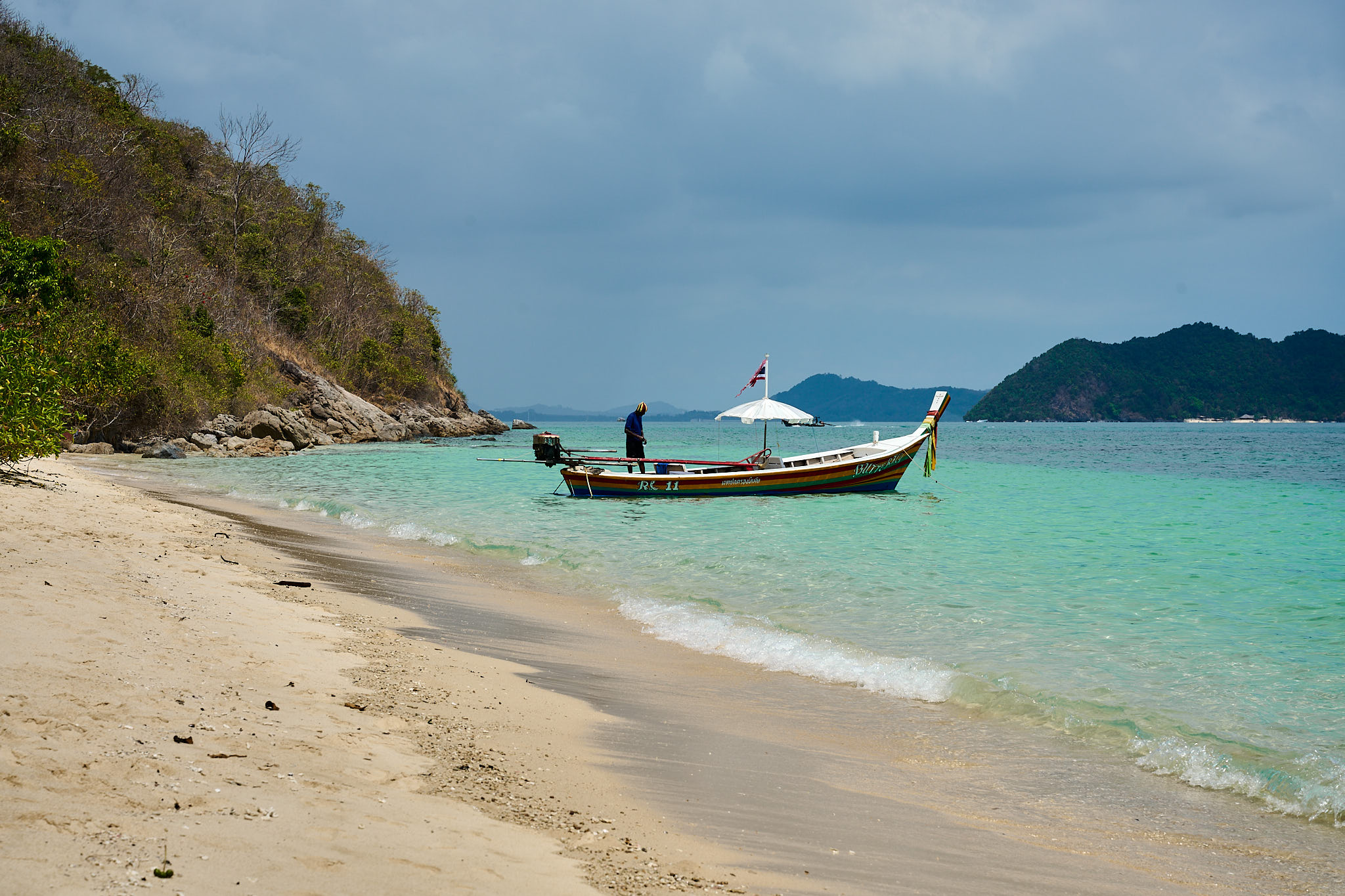
After a long search, we finally managed to find a somewhat more secluded beach. To do so, we had to drive to the quieter part of the island and walk through rough terrain away from the resorts; half through the jungle, half over steep rocks. On this and other trips, these circumstances have often been the guarantee of a beautiful spot. I remember ‘Secret Beach’ in Oregon. Once we arrived, there were tourists here too, enjoying the sun and water, but perhaps a tenth as many as on other beaches: Shallow, warm water, a few trees for shade – but only until the sun sits lower in the sky from five o’clock in the afternoon.

We’ve already described our impressions of our last temple visit. At Wat Plai Laem in the north of Koh Samui, everything looks quite different. We deliberately start the day early and are already there by eight o’clock.

Unfortunately, we were only able to admire this place for about an hour. On the one hand, because the tourists – in shorts – start swarming the place around nine o’clock; on the other, because the sun (on a cloudless day) is already very warm and the photos then lose the magic of the early morning light. Too much glare, harsh shadows.

As we still had plenty of time that morning, we continued our exploration at a nearby temple (Wat Phra Yai), until here too the tourists descended on the hill like a swarm of termites.

Incidentally, the street scene in the gallery (second image from the top left) shows a rather well-kept environment.

2026-02-25_Thailand_205.jpg
2026-02-25_Thailand_206.jpg
2026-02-25_Thailand_204.jpg
2026-03-04_Thailand_269.jpg
2026-03-04_Thailand_266.jpg
2026-03-04_Thailand_277.jpg
2026-03-04_Thailand_267.jpg
2026-03-04_Thailand_287.jpg
2026-03-04_Thailand_288.jpg
2026-03-04_Thailand_293.jpg
2026-03-04_Thailand_294.jpg
2026-03-04_Thailand_296.jpg
2026-03-04_Thailand_299.jpg
2026-03-04_Thailand_301.jpg
2026-03-04_Thailand_312.jpg
2026-03-04_Thailand_319.jpg
2026-03-04_Thailand_323.jpg
2026-03-04_Thailand_327.jpg
2026-03-04_Thailand_336.jpg

22 February 2026

2026-02-21_Thailand_143.jpg
2026-02-21_Thailand_125.jpg
2026-02-21_Thailand_126.jpg
2026-02-21_Thailand_127.jpg
2026-02-21_Thailand_128.jpg
2026-02-21_Thailand_129.jpg
2026-02-21_Thailand_130.jpg
2026-02-21_Thailand_131.jpg
2026-02-21_Thailand_132.jpg
2026-02-21_Thailand_133.jpg
2026-02-21_Thailand_134.jpg
2026-02-21_Thailand_135.jpg
2026-02-21_Thailand_136.jpg
2026-02-21_Thailand_137.jpg
2026-02-21_Thailand_138.jpg
2026-02-21_Thailand_139.jpg
2026-02-21_Thailand_140.jpg
2026-02-21_Thailand_141.jpg
2026-02-21_Thailand_142.jpg
2026-02-21_Thailand_124.jpg
2026-02-21_Thailand_144.jpg
Decay, silence – and the moment we left

Wat Teepangkorn


We did not find Wat Teepangkorn to be a quiet retreat, but rather a place that, in parts, seemed abandoned and left to decay. Peeling paint, moss on the statues, cracked plinths – visible traces of time and the weather. Not a well-maintained sanctuary, but a place where transience is plain to see.

It was precisely this imperfection that gave the temple a special atmosphere. A silence that was not decorative, but solemn. We moved slowly, cautiously, almost automatically becoming quieter. It did not feel like a place one visits, but rather one one encounters.

This mood did not last until the end of our stay.

Towards the end, several groups of visitors arrived on the grounds. They came in pick-up trucks, cheerful, boisterous, clearly in the spirit of the New Year celebrations. Water pistols, laughter, movement. For them, the temple seemed to be part of a larger celebration – a stopover, not the destination.

We would like to emphasise: The New Year celebrations themselves are deeply rooted in Thai culture and of great significance. What struck us as odd, however, was the lack of respect for the place. To us, their clothing, behaviour and noise stood in stark contrast to the dignity of this temple.

At that moment, we no longer felt at ease.

Not out of disapproval, but from the feeling that we were in a place that suddenly no longer felt like one. The silence that had sustained this place had vanished. And with it, our sense of belonging here.

We decided to leave.

Wat Teepangkorn remains for us a place that tells us a great deal – about transience, about respect, and about how differently people can experience the same space. A place that remains in our memory less for what it shows, than for what was lost on that day.

15 February 2026

Arrival in paradise?

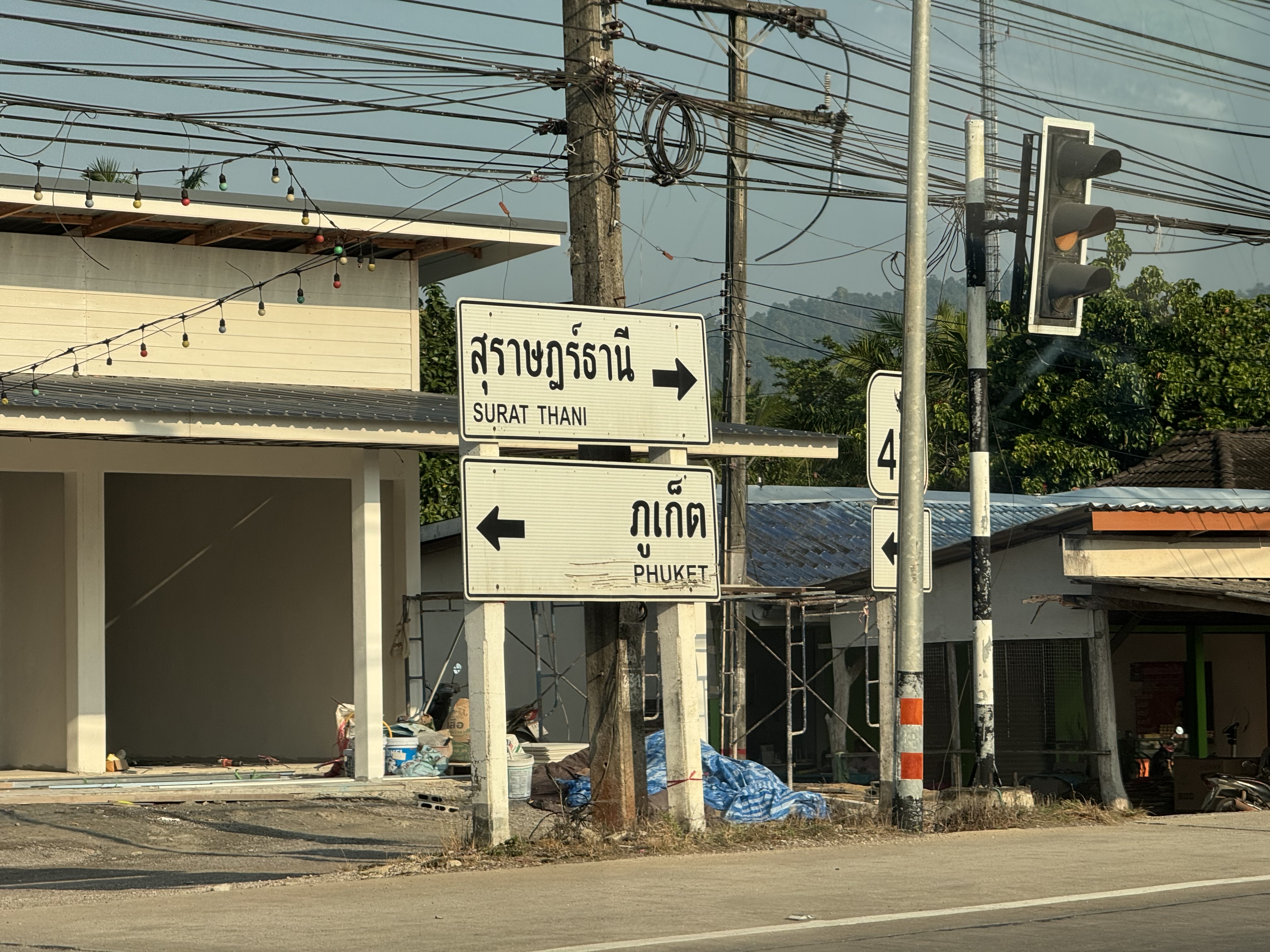
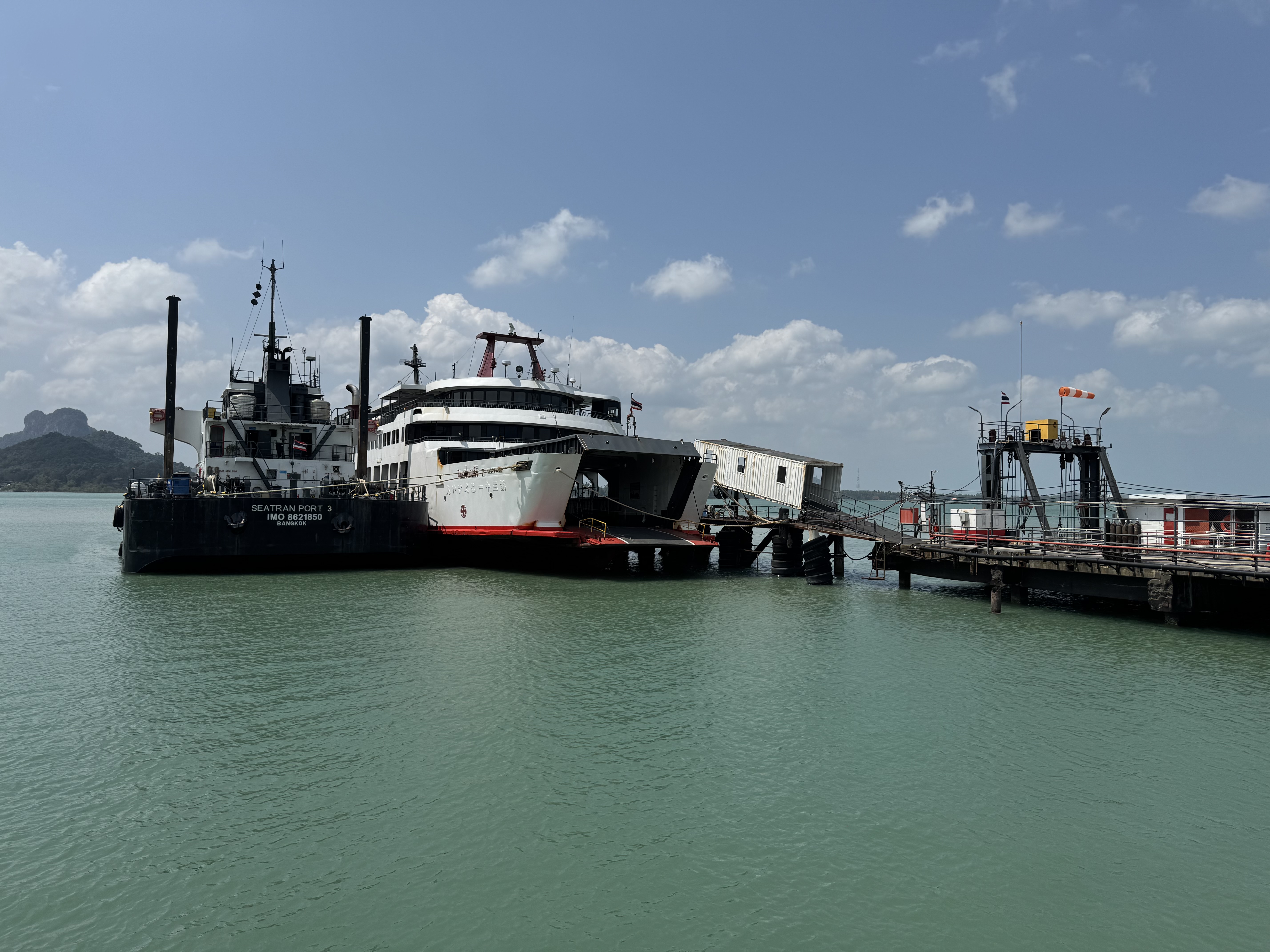
After weeks of unexpectedly cold and wet weather in southern Europe, we decided to temporarily put our camping trip on hold and fly to Thailand. What started out as a pragmatic decision quickly turned into a valuable turning point in our long-term journey. At the end of January, we flew from Lisbon to Phuket, whilst our camper van remained safely stowed away in northern Portugal during the bad weather. In the south of Phuket, we stayed in a house for five days – deliberately choosing a quiet spot to get the jet lag under control. It worked surprisingly well from the very second day, so that shortly afterwards we were able to take our first trip to a small, secluded island. This marked the start of our ‘paradise mode’. At the beginning of February, we moved on to Koh Samui in eastern Thailand. The first few days, however, were unexpectedly labour-intensive: the accommodation we’d originally booked didn’t live up to the price or our expectations in any way. Thanks to booking via Airbnb, however, the problem was resolved within 48 hours – including a refund and new accommodation. Annoying, but a learning experience, and ultimately sorted out quickly. Since then, a very pleasant daily routine has settled in here: constant warmth, school for the boys, exploring the surroundings and making sure to set aside time for relaxation. We’ll be staying on Koh Samui until 22 March, before returning to Phuket by ferry and bus or taxi. After a short period of settling in and one or two more excursions, we’ll fly back to Lisbon at the end of March. For us, Thailand is less a classic holiday destination and more of a strategic break – a place to catch our breath, find stability and reflect on the next stages of our journey with a bit of perspective.

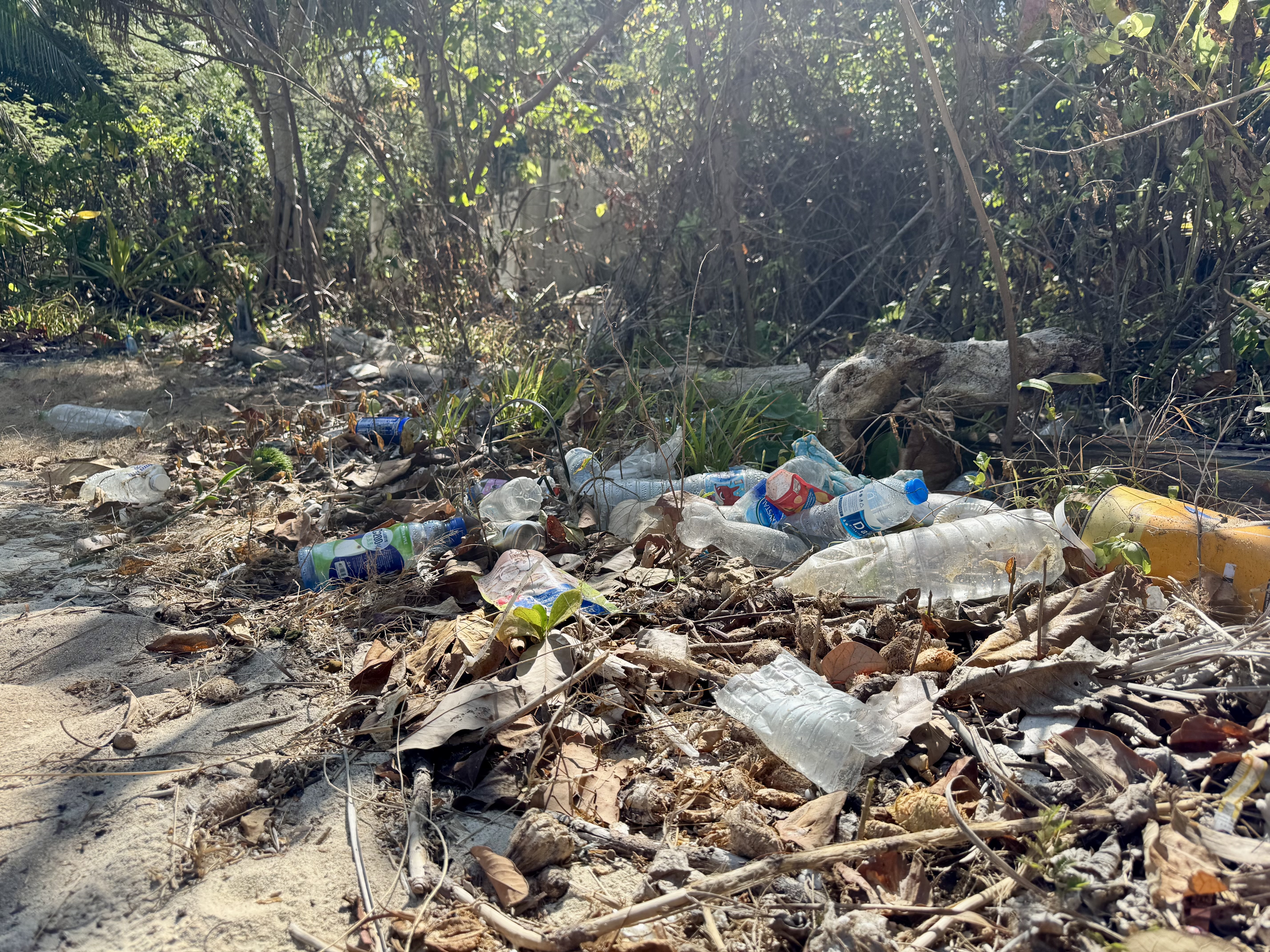
Anyone who thinks the title above conjures up images of tranquillity, unspoilt beauty and pristine nature will soon be disabused of that notion. What we find in many places are crowds of tourists, overcrowded towns and beaches, and an overwhelming amount of rubbish – not just on the mainland, but also on the smaller islands.

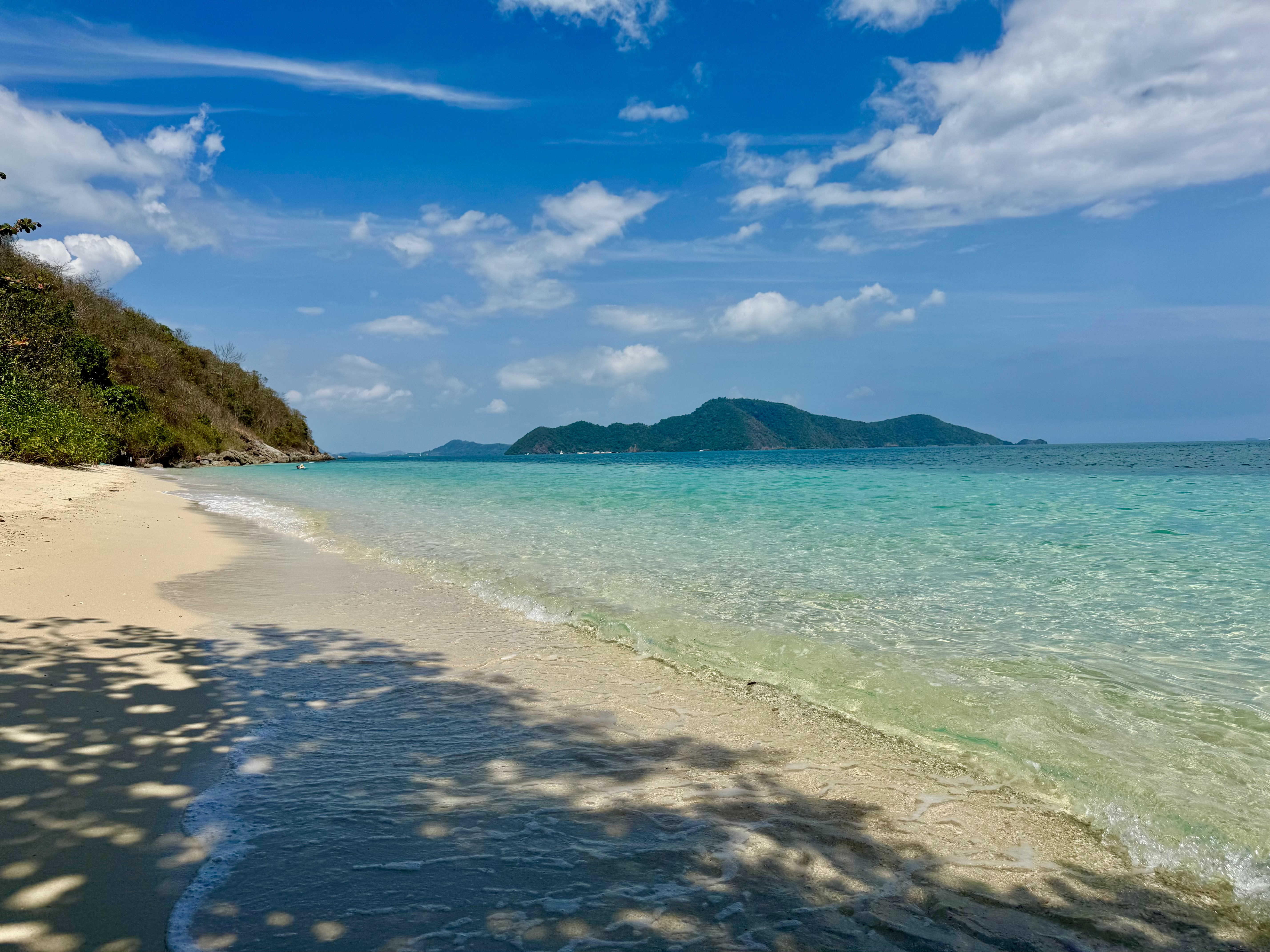
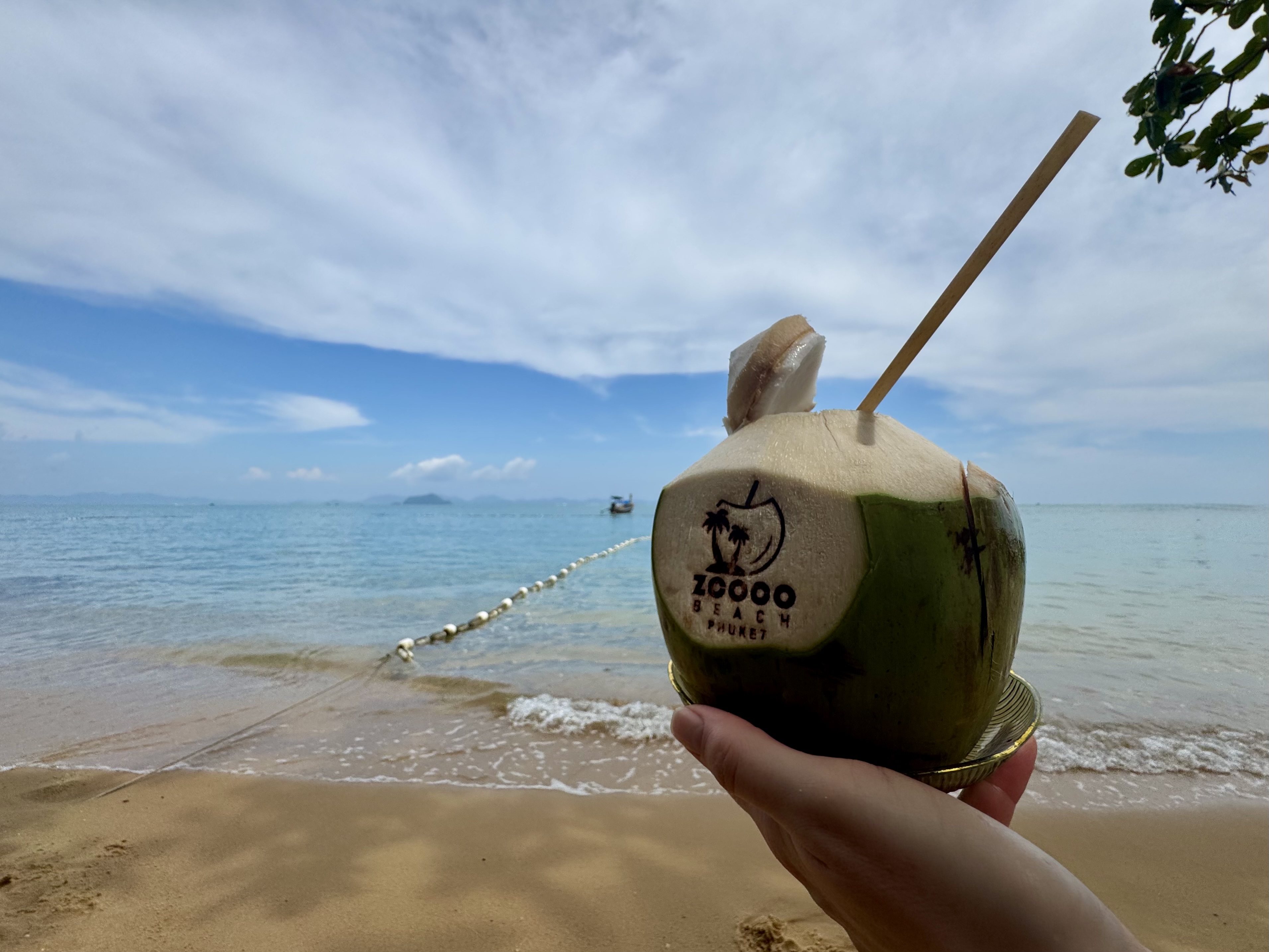
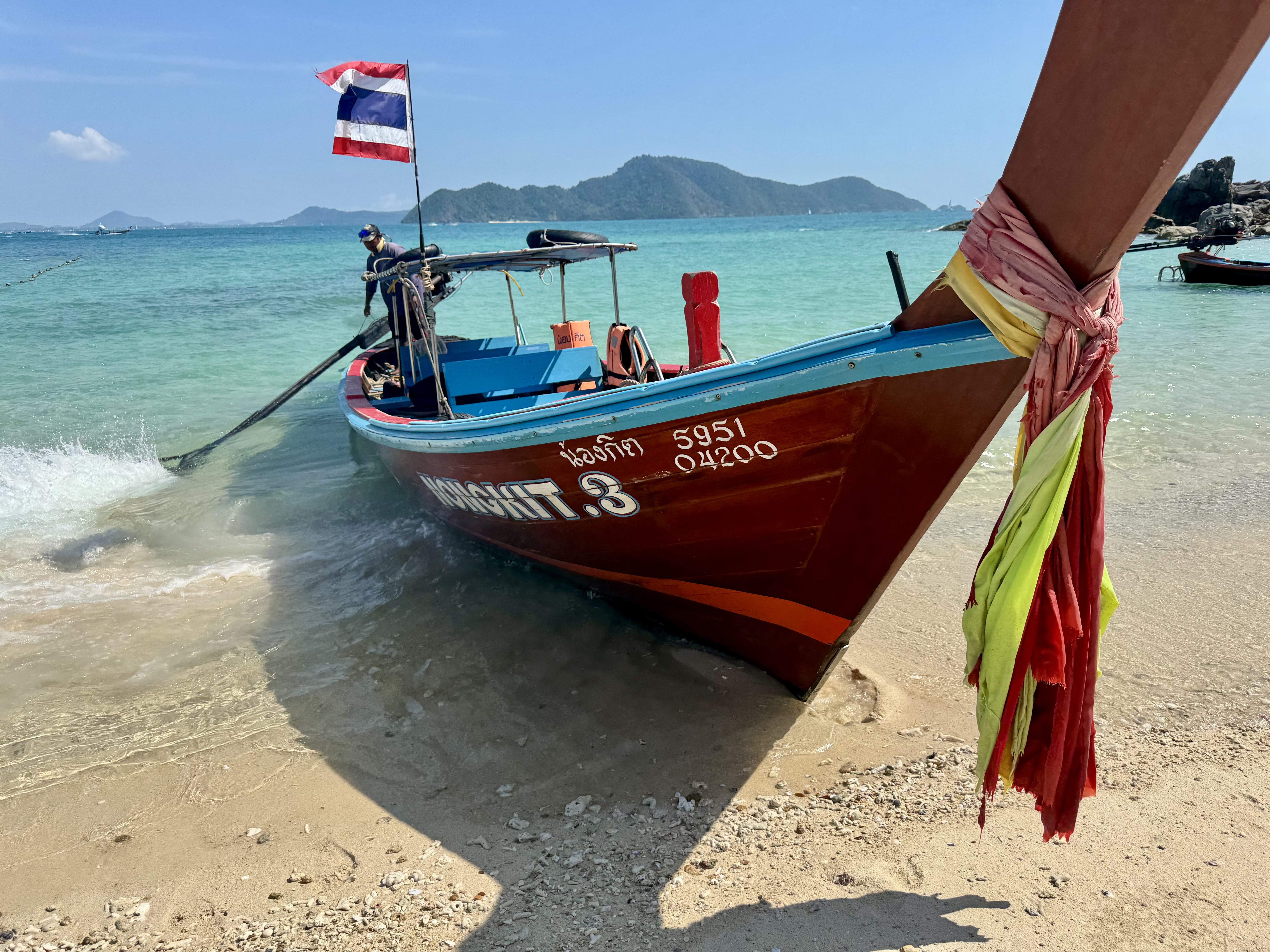
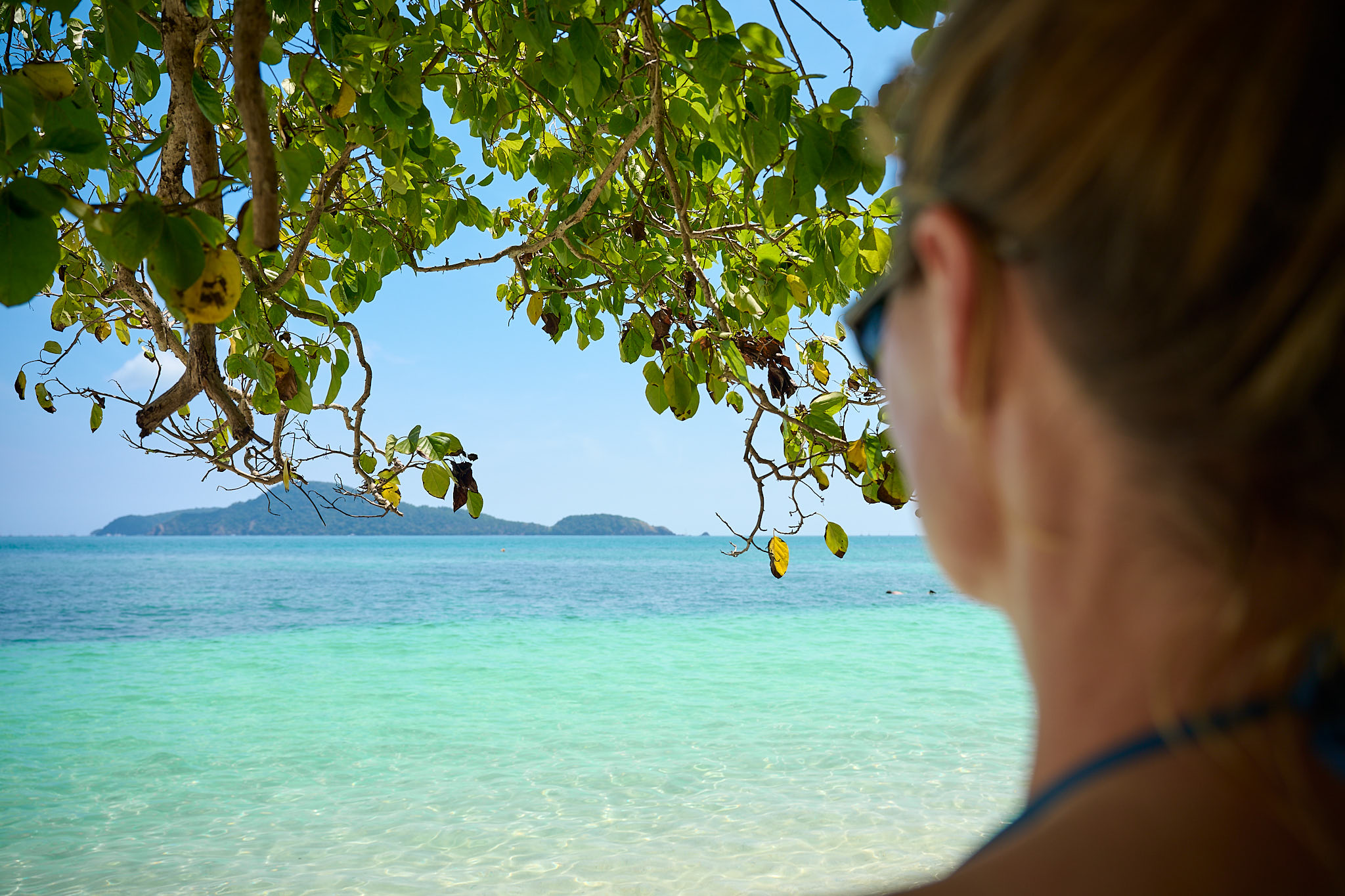
Our stay on Koh Bon (picture below) was particularly striking. At the so-called ‘Honeymoon Beach’, a tacit, almost collective behaviour emerged: everyone’s gaze – and thus every camera – was consistently directed towards the sea.
Behind the beach, in the second row inland, rubbish was piling up. So photos were deliberately taken towards the horizon, sand smoothed out, and framing chosen so that the unsightly remained out of view. Staged wedding photos, almost suggestive dances in skimpy bikinis, and relentless self-promotion dominated the scene, including posed bodies and exaggerated ideals of beauty. This scene continued out on the water: jet skis circled in groups of ten, whilst longtail boats and yachts rattled past incessantly. Paradise exists – but often only within the frame.

This inevitably raises the question of the influence of social media. Much of what we observe here seems to serve less the experience of a place than its exploitability in the digital realm: places become backdrops, beaches become stages, and travel itself becomes a succession of reproducible images.

Anything that does not fit the desired narrative – litter, noise, overcrowding – is systematically filtered out. In our view, it is precisely this behaviour that contributes significantly to the picture we encounter – overused places that have fallen victim to their own appeal.

What remains is a staged version of ‘paradise’ that only works in isolation.
The question that repeatedly comes to mind is a fundamental one: how can one still travel today without destroying precisely those places one seeks?
And perhaps taking it a step further – does genuine travel not begin precisely where one is prepared to see and endure the uncomfortable, rather than filtering it out?